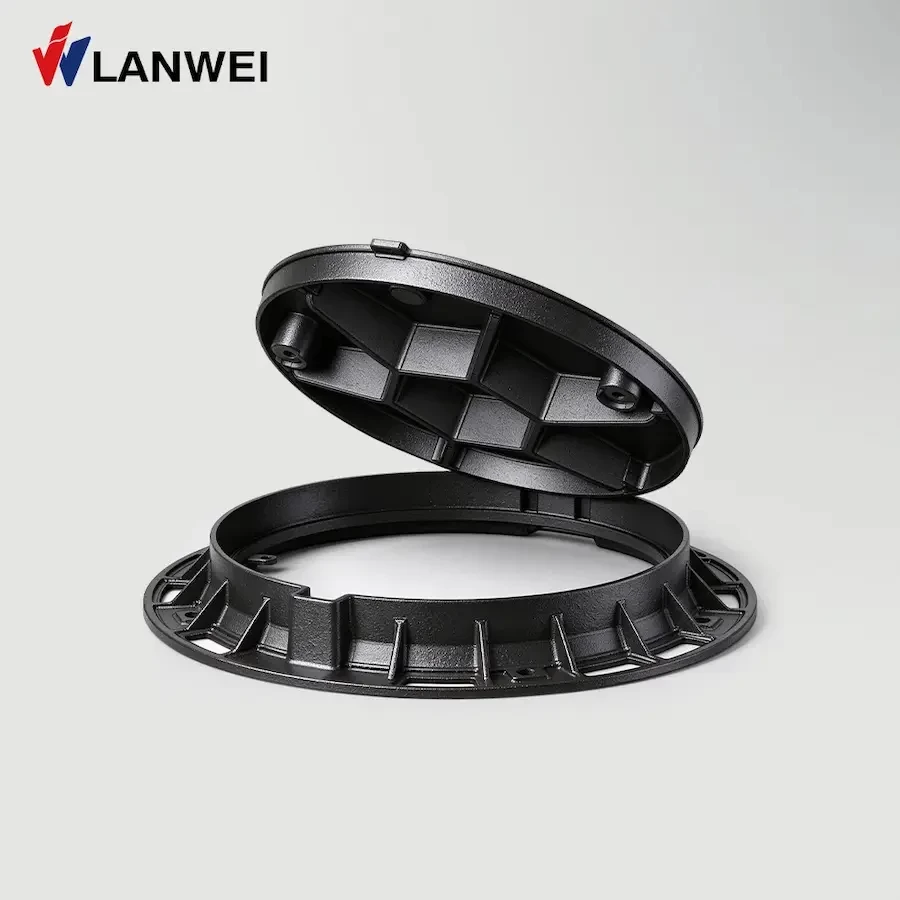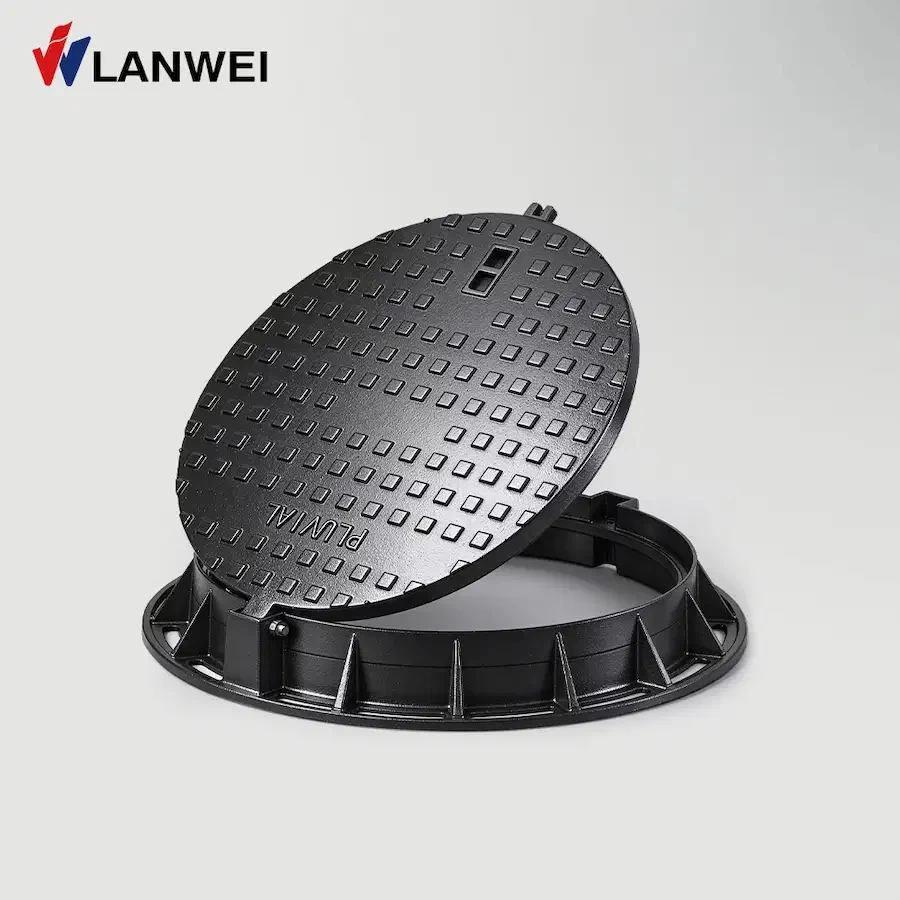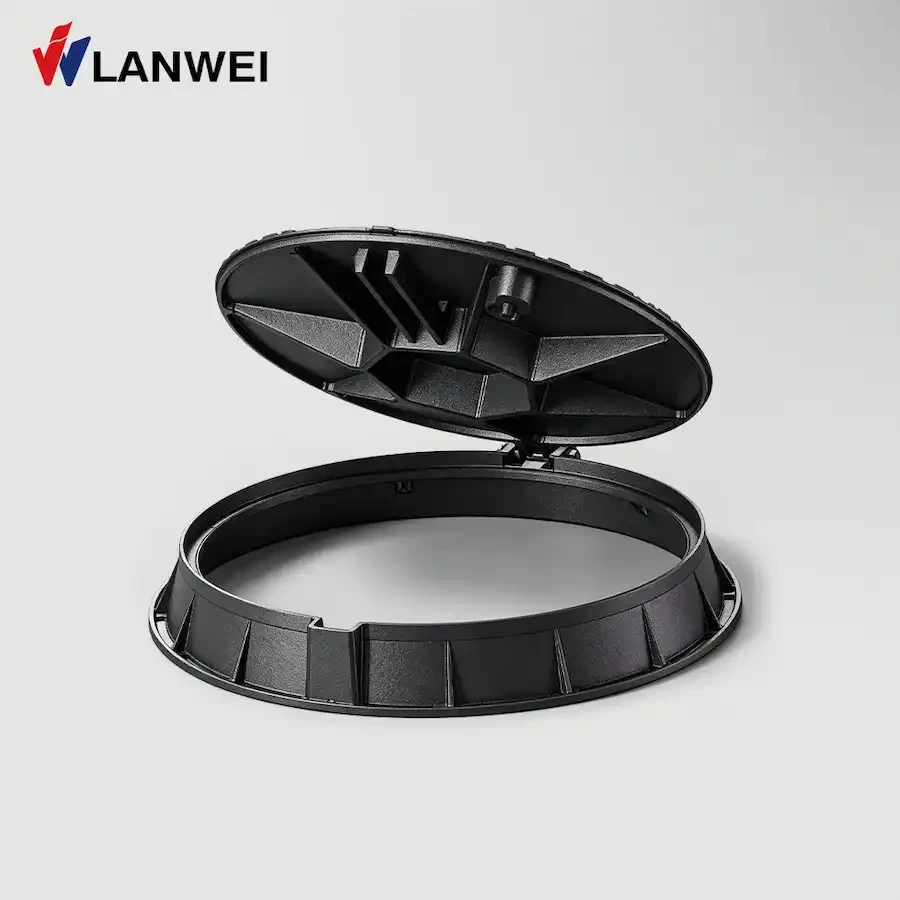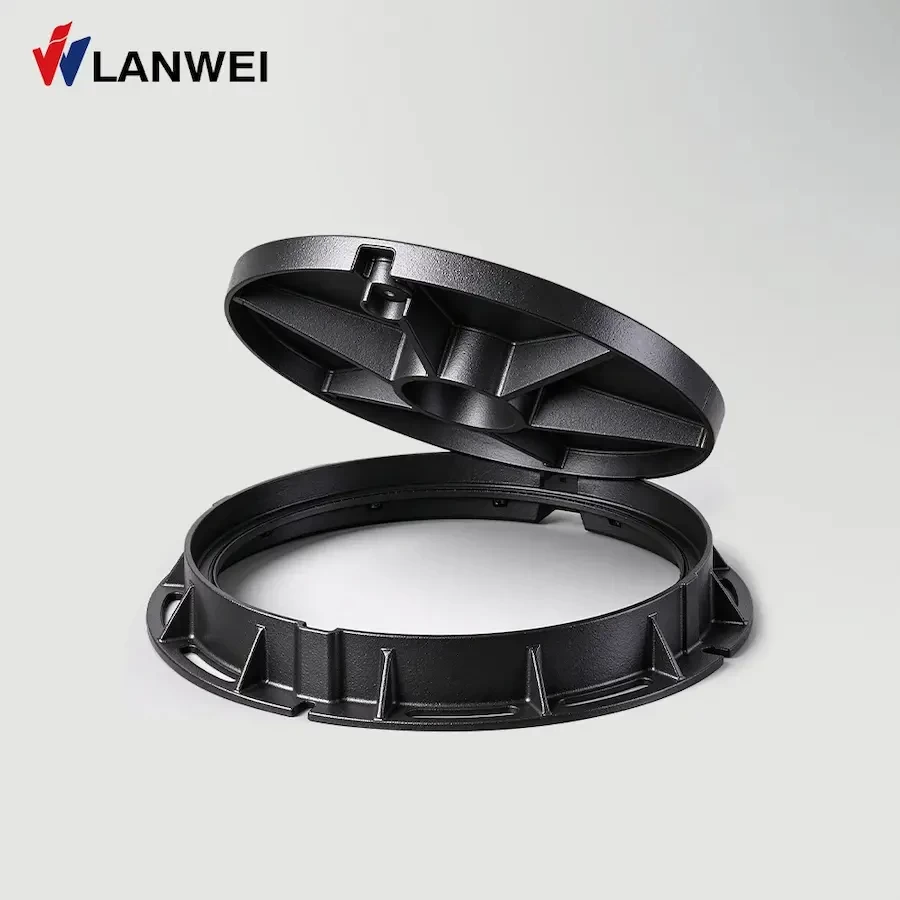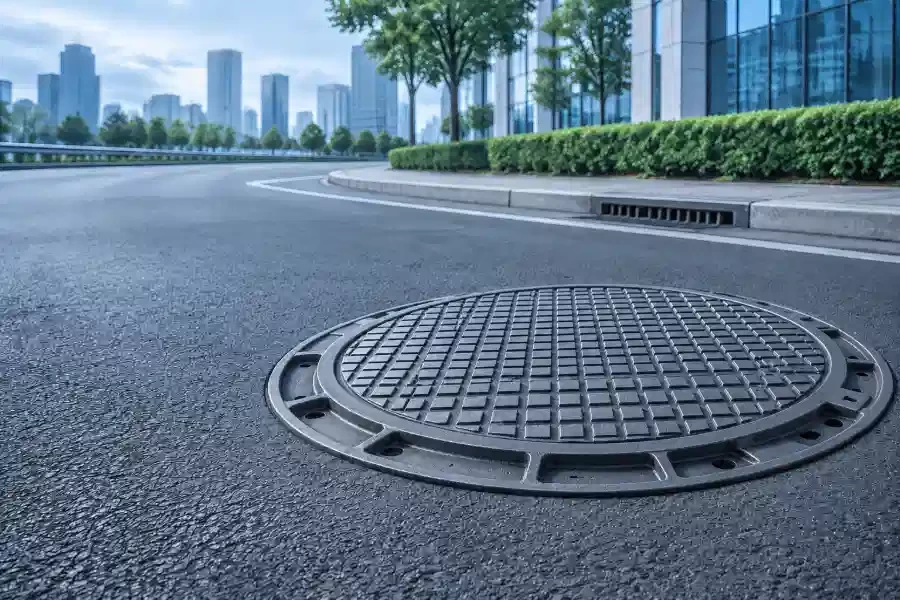
Ductile Iron vs Cast Iron Manhole Covers: Which Should You Choose?
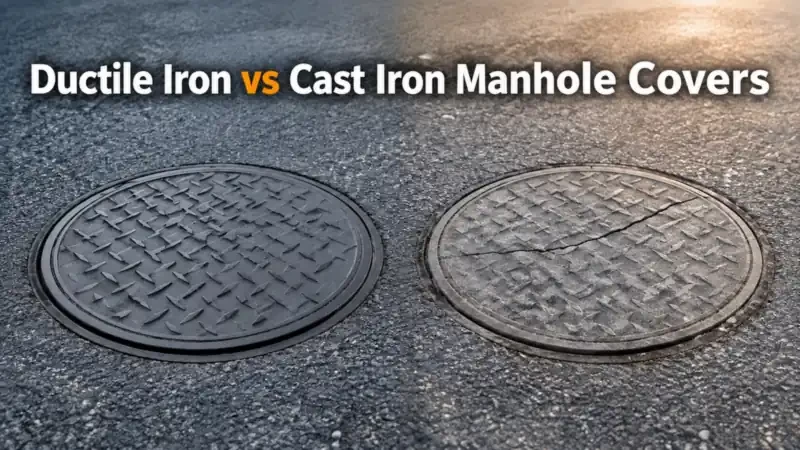
If you are comparing ductile iron vs cast iron manhole covers, the short answer is this. Choose ductile iron for roads, ports, fuel stations and any location rated EN 124 class D400 or higher. It is stronger, lighter for the same load class, and much less likely to crack, which usually makes it cheaper over the cover's life. Grey cast iron is still a reasonable choice for low-load, budget-sensitive areas such as footpaths, gardens and pedestrian zones (classes A15–C250), where impact and fatigue loads are small.
This guide is written for procurement teams: importers, distributors and contractors. It explains the metallurgy in plain terms, compares the two materials side by side, maps them to EN 124 load classes, and finishes with a sourcing checklist you can drop straight into your next RFQ.
What Is the Difference Between Ductile Iron and Grey Cast Iron?
Both materials are iron with roughly 3–4% carbon, and both are poured in the same kind of foundry. The difference is the shape of the graphite inside the metal. That one microstructural detail controls almost every property a buyer cares about.
Grey Cast Iron (EN-GJL-250): Flake Graphite, Brittle Failure
In grey cast iron, which the industry often just calls "cast iron", carbon forms thin graphite flakes. Each flake acts like a tiny internal crack. Under compression the material performs well, and it damps vibration and machines easily. Under tension, bending or sudden impact, though, the flakes concentrate stress, and the part breaks with almost no warning. EN-GJL-250, a common grade for covers, has a minimum tensile strength of about 250 MPa and elongation below 1%. In practice, a grey iron cover that is overloaded tends to snap rather than bend.
Ductile Iron (EN-GJS-500-7): Nodular Graphite, Bends Before It Breaks
Ductile iron, also called nodular or spheroidal graphite (SG) iron, is made by treating the molten metal with magnesium before pouring. The graphite then forms round nodules instead of flakes. Without sharp crack starters, the metal can stretch. EN-GJS-500-7 offers a minimum tensile strength of about 500 MPa and at least 7% elongation, roughly double the strength of common grey iron grades. An overloaded ductile cover deforms first, which gives inspectors time to spot and replace it before it fails completely.
Ductile Iron vs Cast Iron Manhole Covers: Side-by-Side Comparison
The table below summarises how ductile iron vs cast iron manhole covers compare on the factors that drive purchasing decisions.
| Factor | Grey Cast Iron (EN-GJL-250) | Ductile Iron (EN-GJS-500-7) |
|---|---|---|
| Graphite structure | Flakes | Spheroidal nodules |
| Min. tensile strength | ~250 MPa | ~500 MPa |
| Elongation | < 1% (brittle) | ≥ 7% (ductile) |
| Failure mode | Sudden fracture | Deforms before breaking |
| Weight for same load class | Heavier (needs thicker sections) | Lighter (thinner sections possible) |
| Typical EN 124 use | A15–C250, some D400 | B125–F900 |
| Material cost per kg | Lower | Higher (Mg treatment, tighter process control) |
| Breakage and replacement rate | Higher under traffic | Low |
| Scrap value to thieves | Similar | Similar, but lighter covers need locking |
| Best fit | Pedestrian zones, gardens, low budgets | Roads, ports, airports, fuel stations |
The pattern is clear. Grey iron wins on unit price per kilogram. Ductile iron wins on almost every performance measure, and often on total cost once weight and replacements are included.
Strength and EN 124 Load Classes (A15 to F900)
EN 124 is the standard most international buyers specify for manhole covers and gully gratings. Since the 2015 revision, it is published in parts; EN 124-2 covers cast iron, both grey and ductile. It sets six load classes based on the test load a cover must withstand without cracking and within a permitted permanent set:
| Class | Test load | Typical location |
|---|---|---|
| A15 | 15 kN | Pedestrian and cycle areas |
| B125 | 125 kN | Footways, car parks for cars |
| C250 | 250 kN | Kerbside channels, road shoulders |
| D400 | 400 kN | Carriageways, roads, hard shoulders |
| E600 | 600 kN | Docks, loading yards, industrial floors |
| F900 | 900 kN | Airports, heavy port pavements |
Both materials can be designed to pass a given test load. What differs is how much metal is needed to pass it, and how the cover behaves under repeated real-world traffic rather than a single laboratory test.
Which Load Class Does Your Project Need?
Choose the load class from the worst-case location of the cover, not its typical use. A cover in a pedestrian plaza that delivery trucks cross needs D400, not B125. For road projects, a D400 manhole cover is the baseline in most markets. Specify E600 or F900 for ports, logistics hubs and airside areas. When the tender drawing is vague, ask the engineer to confirm the class in writing. Under-specifying is the most common cause of early cover failure and warranty disputes.
Why Ductile Covers Are Lighter for the Same Load Class
Because ductile iron is roughly twice as strong in tension, designers can use thinner ribs and plates. A ductile D400 cover is therefore often significantly lighter than a grey iron cover of the same class and clear opening. Lighter covers are easier and safer to lift, cheaper to ship, and kinder to installation crews' backs. Compare weights from the supplier's drawings, not catalogue headlines.
Manhole Cover Price: Upfront Cost vs Lifecycle Cost
On a per-kilogram basis, ductile iron costs more. The magnesium treatment, inoculation and stricter process control add cost, as does the metallurgical testing needed to confirm nodularity. If you compare only the ex-works unit price of two covers that weigh the same, grey iron looks cheaper.
That comparison is misleading, because the two covers rarely weigh the same. Since a ductile cover usually needs less metal for the same load class, the per-piece price gap shrinks, and for heavy classes it can disappear. Always request quotations per piece, with the unit weight stated, so that you compare equivalent products.
Hidden Savings in Freight, Handling and Replacement
For importers, three cost lines often outweigh the factory price:
1. Freight. A 20 ft container is usually weight-limited before it is volume-limited with iron castings. Lighter ductile covers mean more pieces per container and a lower landed cost per unit.
2. Breakage in transit and on site. Grey iron covers can crack if dropped during unloading or installation. Every broken piece is a write-off plus a delay.
3. In-service replacement. On trafficked roads, a cracked cover means a lane closure, labour, traffic management and liability exposure. Over a 20–30 year service life, one avoided replacement often pays for the material premium many times over.
Worked example (illustrative): suppose a contractor needs 500 D400 covers. A slightly higher unit price for ductile iron can be fully offset if the lighter design fits more covers per container and saves even one shipment. That is before counting a single avoided field replacement.
Durability, Safety and Theft Risk
Durability is where ductile iron pulls furthest ahead. Traffic loads are dynamic. Every axle that crosses a cover delivers an impact, and over millions of cycles the flake structure of grey iron is prone to fatigue cracking. Ductile iron's nodular structure resists crack growth, so covers on busy roads stay intact far longer.
Safety follows from the failure mode. A cracked grey iron cover can collapse suddenly under a wheel and leave an open shaft, which is a serious hazard for vehicles, cyclists and pedestrians. A ductile cover that is overloaded tends to deform and stay in its frame, which gives maintenance teams a visible warning.
Theft is a material-neutral risk: both irons have scrap value. Because ductile covers are lighter, specify hinged, locking or bolted designs in high-theft areas, along with anti-rock features such as cushion inserts or three-point seating. Rocking covers are noisy, wear the frame seat and loosen over time.
When a Grey Cast Iron Manhole Cover Still Makes Sense
Grey iron is not obsolete. A grey cast iron manhole cover is a sensible, cost-effective choice when all of the following apply:
• The location is rated A15, B125 or C250, with no realistic chance of heavy vehicles crossing it.
• The project is budget-driven, such as residential landscaping, gardens or internal walkways.
• Weight is an advantage, for example in low-security areas where a heavy, non-hinged cover discourages casual removal.
• The local specification or utility standard explicitly calls for grey iron, which still happens in some markets.
Grey iron's good compressive strength and vibration damping also suit frames, which are bedded in concrete and loaded mainly in compression. Some projects therefore pair a ductile cover with a grey iron frame to balance cost and performance. If you go this route, confirm that the combination is tested and certified as a complete unit to EN 124. Mixing materials from different foundries without a combined test is a common audit finding.
Buyer's Checklist: How to Source Ductile Iron Manhole Covers
A good ductile iron manhole cover depends on foundry discipline. Poor magnesium treatment produces iron with low nodularity, which behaves more like grey iron while being sold at ductile prices. Use this checklist to protect your order.
Specifications to Include in Your RFQ
State these items explicitly in every request for quotation:
• Standard and class: for example, "EN 124-2, class D400".
• Material grade: for example, "EN-GJS-500-7 cover, frame EN-GJS-500-7 or EN-GJL-250".
• Clear opening and overall frame size in mm, plus frame depth.
• Shape and opening: round, square or rectangular; single or multi-part.
• Features: hinge, lock, cushion insert, ventilation holes, anti-slip pattern.
• Marking: standard number, class, manufacturer ID, and custom logo or text (for example, "SEWER" or a utility name).
• Coating: black bitumen or water-based paint, and the required thickness.
• Packaging: pallet type, pieces per pallet, and maximum container payload.
How to Verify a Manhole Cover Supplier
Before you place a volume order, ask the manufacturer for:
1. A test report for the exact model and class, showing the test load and permanent set results, ideally witnessed or issued by an independent laboratory.
2. A material certificate with chemical composition, tensile strength, elongation and a nodularity percentage. Most ductile specifications expect at least 80%.
3. Microstructure photos of the casting batch.
4. A sample or pre-shipment inspection by a third-party inspector: dimensions, weight, seating flatness and marking.
5. Product liability terms and a clear replacement policy for castings that fail tests.
FAQ
Is ductile iron stronger than cast iron?
Yes. Typical ductile iron grades used for covers have roughly twice the tensile strength of common grey cast iron grades, and they can stretch by 7% or more before breaking, while grey iron stretches by less than 1%.
Are ductile iron manhole covers more expensive?
Per kilogram, yes. Per piece at the same load class, the gap is often small because ductile covers need less metal. Once freight and replacements are included, ductile iron is usually the lower-cost option for trafficked areas.
Can grey cast iron covers meet D400?
Some grey iron designs pass the D400 test load, but they need heavier sections. They are also more vulnerable to impact and fatigue cracking, so most specifiers prefer ductile iron from D400 upward.
How do I check whether a cover is really ductile iron?
Ask for a material certificate with elongation and a nodularity percentage, plus microstructure photos. Grey iron cannot reach 7% elongation, so the tensile test result is a reliable indicator.
Conclusion: Choosing Between Ductile Iron and Cast Iron Manhole Covers
For most commercial and municipal projects, the ductile iron vs cast iron manhole covers decision comes down to load and lifecycle. Specify ductile iron for D400 and above, for anywhere vehicles can reach, and wherever a broken cover would be costly or dangerous. Reserve grey cast iron for genuinely low-load, budget-sensitive areas, or for frames bedded in concrete.
Whichever material you choose, the outcome depends on the details in your specification. State the EN 124 class, the material grade and the clear opening, then insist on test reports and material certificates before shipment. A well-specified order from a disciplined foundry will outperform a cheaper, loosely specified one for decades. When in doubt about a borderline location, step up one load class. The extra cost per cover is small compared with a single failure on a live road.
Need a quote? LANWEI manufactures ductile iron and cast iron manhole covers, frames and gratings for international buyers. Send us your load class, clear opening, quantity and destination port, and our team will recommend the right material and design for your project.